
Wellness Library
Metabolic Wellness


Text version
Blood Sugar Regulation Guide
KEEP YOUR ENERGY & MOOD STEADY WITH THESE SIMPLE BLOOD SUGAR HACKS
This is for education purposes only. Never change diet and exercise without consulting your doctor.
bLOOD sUGAR rEGULATION
The basics
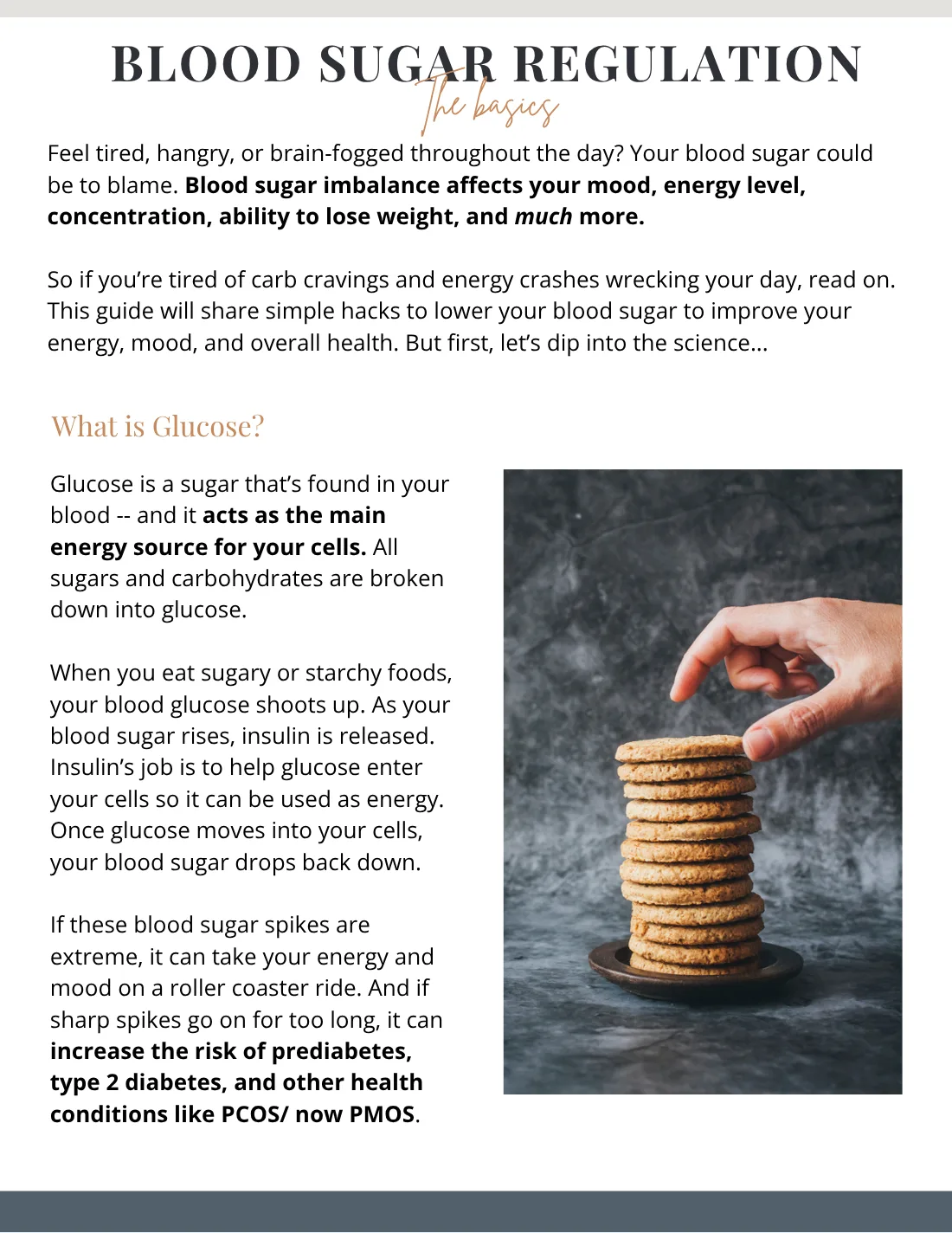
Feel tired, hangry, or brain-fogged throughout the day? Your blood sugar could be to blame. Blood sugar imbalance affects your mood, energy level, concentration, ability to lose weight, and much more.
So if you’re tired of carb cravings and energy crashes wrecking your day, read on. This guide will share simple hacks to lower your blood sugar to improve your energy, mood, and overall health. But first, let’s dip into the science...
What is Glucose?
Glucose is a sugar that’s found in your blood -- and it acts as the main energy source for your cells. All sugars and carbohydrates are broken down into glucose.
When you eat sugary or starchy foods, your blood glucose shoots up. As your blood sugar rises, insulin is released. Insulin’s job is to help glucose enter your cells so it can be used as energy. Once glucose moves into your cells, your blood sugar drops back down.
If these blood sugar spikes are extreme, it can take your energy and mood on a roller coaster ride. And if sharp spikes go on for too long, it can increase the risk of prediabetes, type 2 diabetes, and other health conditions like PCOS/ now PMOS.
Blood Sugar Regulation
Once glucose lands in the bloodstream, it’s taken up by your mitochondria -- the “energy powerhouses” of your cells. Glucose overload can stress your mitochondria, causing free radicals to form. Free radicals cause inflammation, and oxidative stress, and harm your DNA.
Glucose spikes can even make you age faster. Glucose excess leads to glycation, which degrades proteins like collagen and elastin (the ones that keep your skin supple and flexible). This can lead to premature aging.
Blood sugar spikes can also cause excess glucose to get stored in your liver, muscles, and fat cells. Meaning, blood sugar spikes can lead you to gain body fat.
Why it matters
Why Glucose Spikes are Bad News
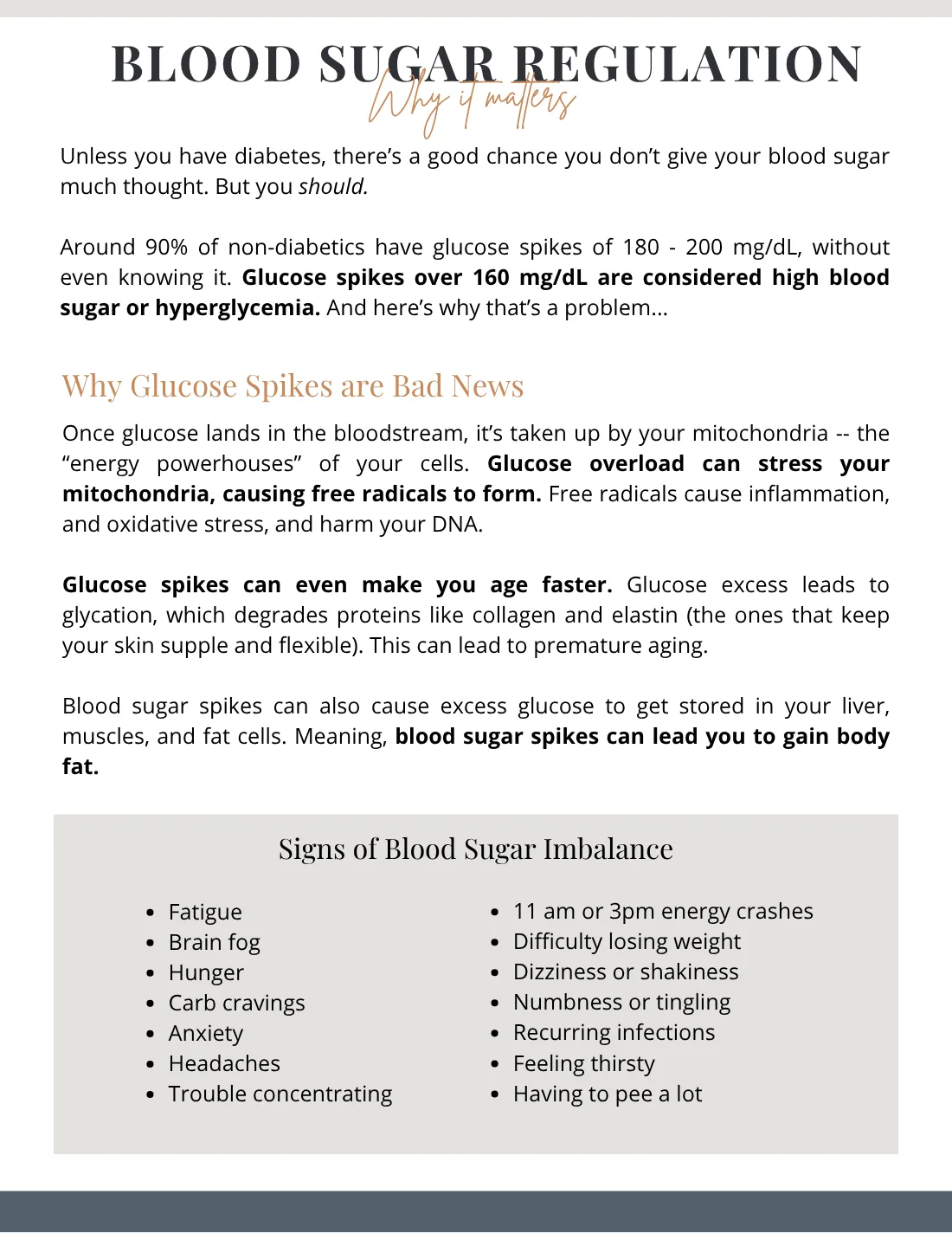
Signs of Blood Sugar Imbalance
- Fatigue
- Brain fog
- Hunger
- Carb cravings
- Anxiety
- Headaches
- Trouble concentrating
Unless you have diabetes, there’s a good chance you don’t give your blood sugar much thought. But you should.
Around 90% of non-diabetics have glucose spikes of 180 - 200 mg/dL, without even knowing it. Glucose spikes over 160 mg/dL are considered high blood sugar or hyperglycemia. And here’s why that’s a problem...
- 11 am or 3pm energy crashes
- Difficulty losing weight
- Dizziness or shakiness
- Numbness or tingling
- Recurring infections
- Feeling thirsty
- Having to pee a lot
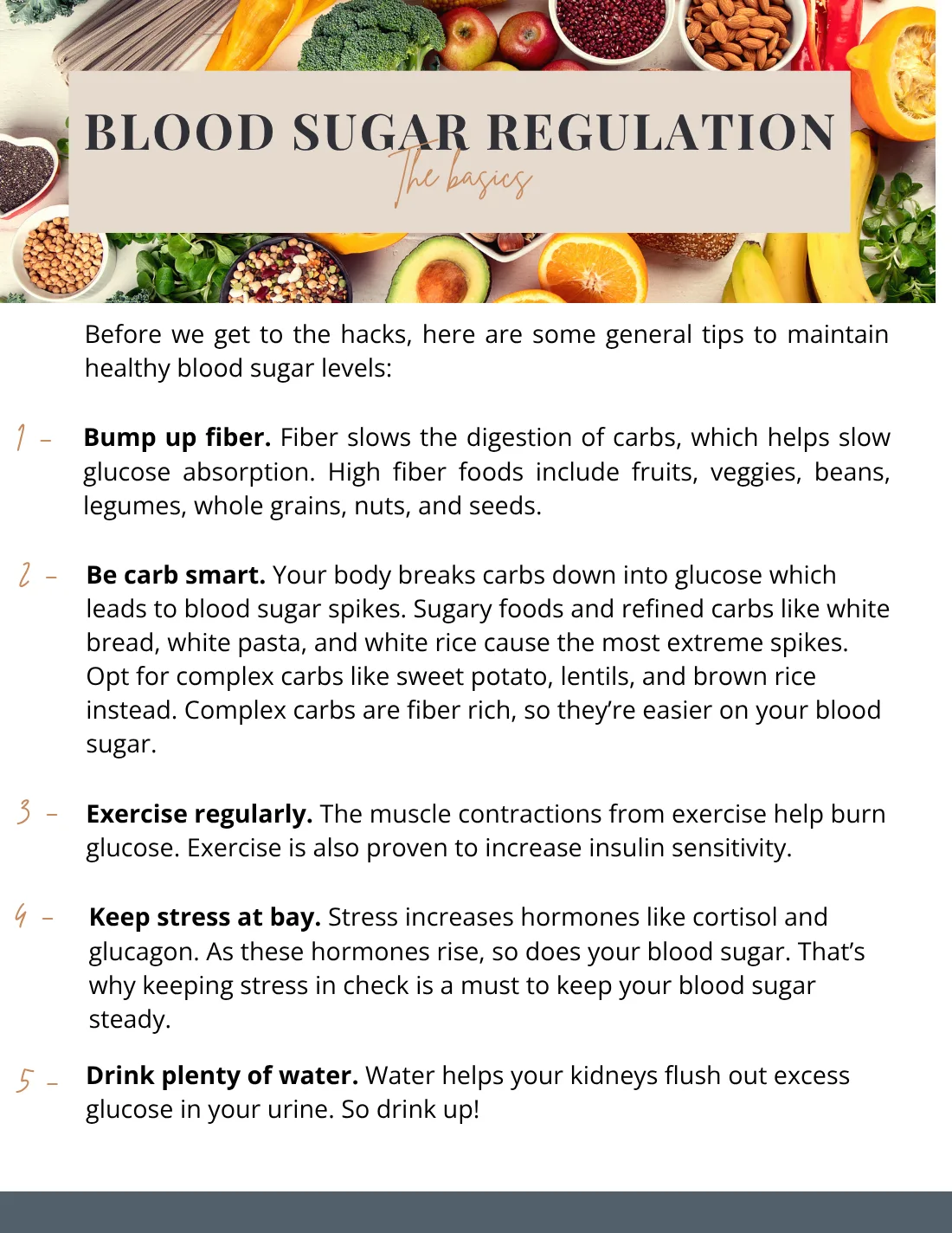
Bump up fiber. Fiber slows the digestion of carbs, which helps slow glucose absorption. High fiber foods include fruits, veggies, beans, legumes, whole grains, nuts, and seeds.
Drink plenty of water. Water helps your kidneys flush out excess glucose in your urine. So drink up!
Be carb smart. Your body breaks carbs down into glucose which leads to blood sugar spikes. Sugary foods and refined carbs like white bread, white pasta, and white rice cause the most extreme spikes. Opt for complex carbs like sweet potato, lentils, and brown rice instead. Complex carbs are fiber rich, so they’re easier on your blood sugar.
Keep stress at bay. Stress increases hormones like cortisol and glucagon. As these hormones rise, so does your blood sugar. That’s why keeping stress in check is a must to keep your blood sugar steady.
Exercise regularly. The muscle contractions from exercise help burn glucose. Exercise is also proven to increase insulin sensitivity.
1 -
2 -
3 -
4 -
5 -
Blood sugar regulation
Before we get to the hacks, here are some general tips to maintain healthy blood sugar levels:
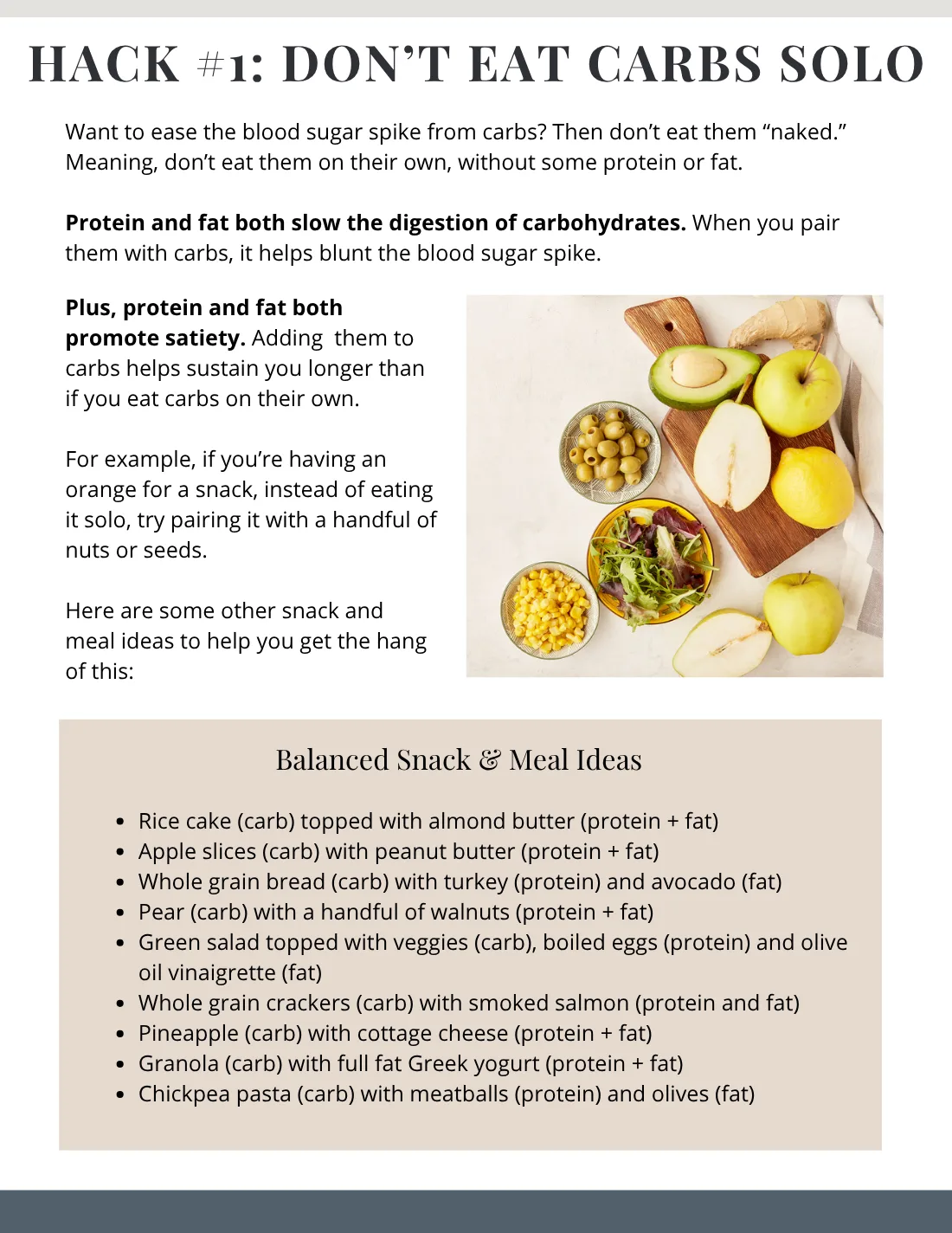
- Rice cake (carb) topped with almond butter (protein + fat)
- Apple slices (carb) with peanut butter (protein + fat)
- Whole grain bread (carb) with turkey (protein) and avocado (fat)
- Pear (carb) with a handful of walnuts (protein + fat)
- Green salad topped with veggies (carb), boiled eggs (protein) and olive oil vinaigrette (fat)
- Whole grain crackers (carb) with smoked salmon (protein and fat)
- Pineapple (carb) with cottage cheese (protein + fat)
- Granola (carb) with full fat Greek yogurt (protein + fat)
- Chickpea pasta (carb) with meatballs (protein) and olives (fat)
Balanced Snack & Meal Ideas
HAck #1: Don’t eat carbs solo
Plus, protein and fat both promote satiety. Adding them to carbs helps sustain you longer than if you eat carbs on their own.
For example, if you’re having an orange for a snack, instead of eating it solo, try pairing it with a handful of nuts or seeds.
Here are some other snack and meal ideas to help you get the hang of this:
Want to ease the blood sugar spike from carbs? Then don’t eat them “naked.” Meaning, don’t eat them on their own, without some protein or fat.
Protein and fat both slow the digestion of carbohydrates. When you pair them with carbs, it helps blunt the blood sugar spike.
Savory Breakfast Ideas
- Chia seed pudding with berries and nuts
- Green smoothie with protein powder and flaxseed
- Greek yogurt with apple slices and walnuts
- Scrambled eggs with tomatoes and onions
- Omelet with mushrooms, peppers, and spinach w/sliced avocado
- Breakfast bowl with ground turkey, sweet potatoes, and kale
- Smoked salmon on avocado toast
- Dinner leftovers
Hack #2: Start Savory
Ever notice that when you have pancakes or waffles for breakfast you end up ravenous by 10 am? That’s not your imagination. That’s a glucose crash.
What you eat first thing in the morning affects your blood sugar regulation for the rest of the day.
So if you want to set your blood sugar up for success, ditch the donuts, sugary cereals, and OJ and have a savory breakfast instead.
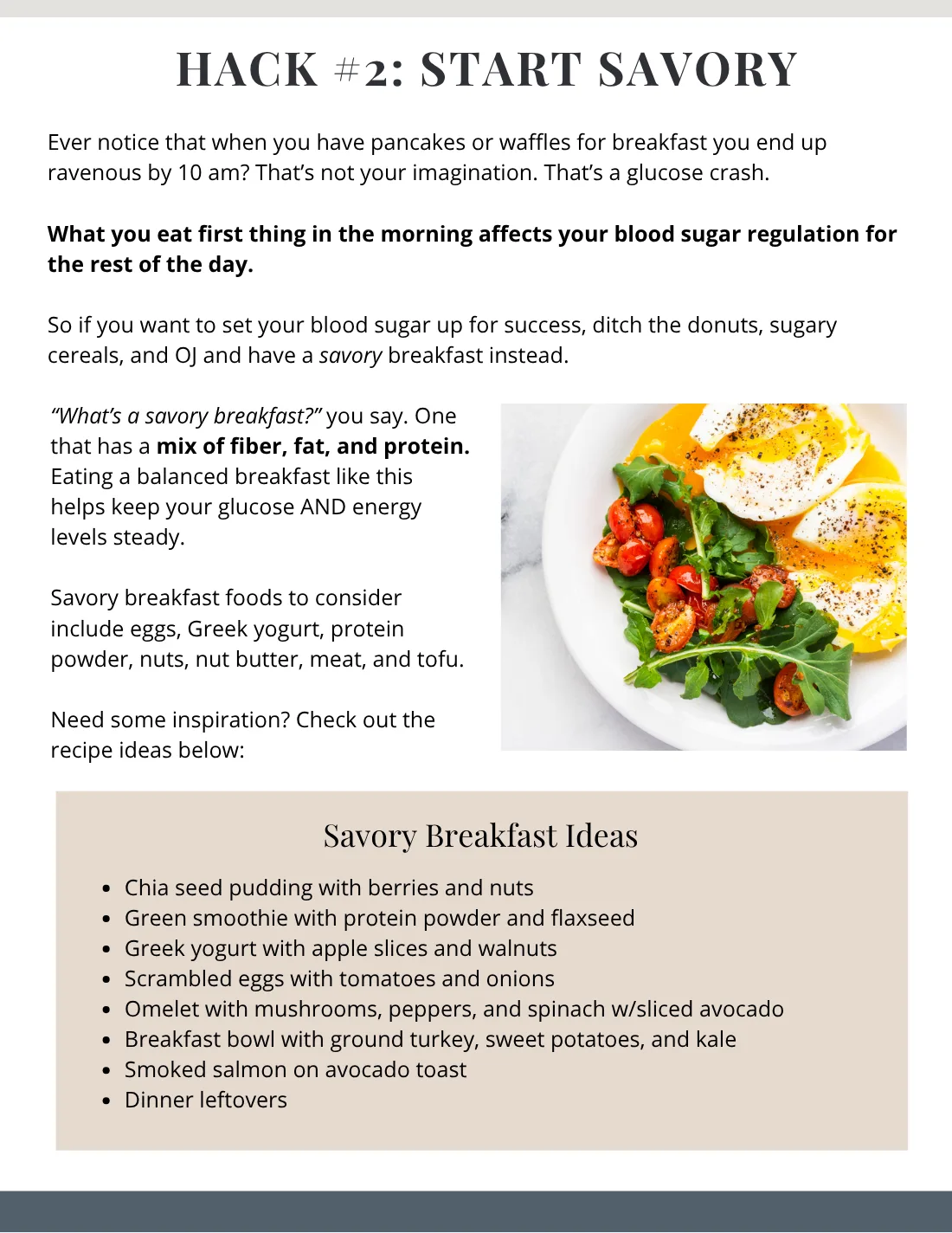
“What’s a savory breakfast?” you say. One that has a mix of fiber, fat, and protein. Eating a balanced breakfast like this helps keep your glucose AND energy levels steady.
Savory breakfast foods to consider include eggs, Greek yogurt, protein powder, nuts, nut butter, meat, and tofu.
Need some inspiration? Check out the recipe ideas below:
It’s not just the type of foods you eat that affects your blood sugar. The order you eat them matters too.
Hack #3: order matters
The most blood sugar friendly way to eat meals is:
- Veggies (fiber) first
- Protein and fats second
- Carbs last
Yes, some meals may can make it tough to stick to this order. But just play with it and do the best you can. For example, if spaghetti with meat sauce is on the menu, consider starting your meal with a green salad first.
To see graphs of this tip in action, check out the Glucose Goddess’ Instagram.
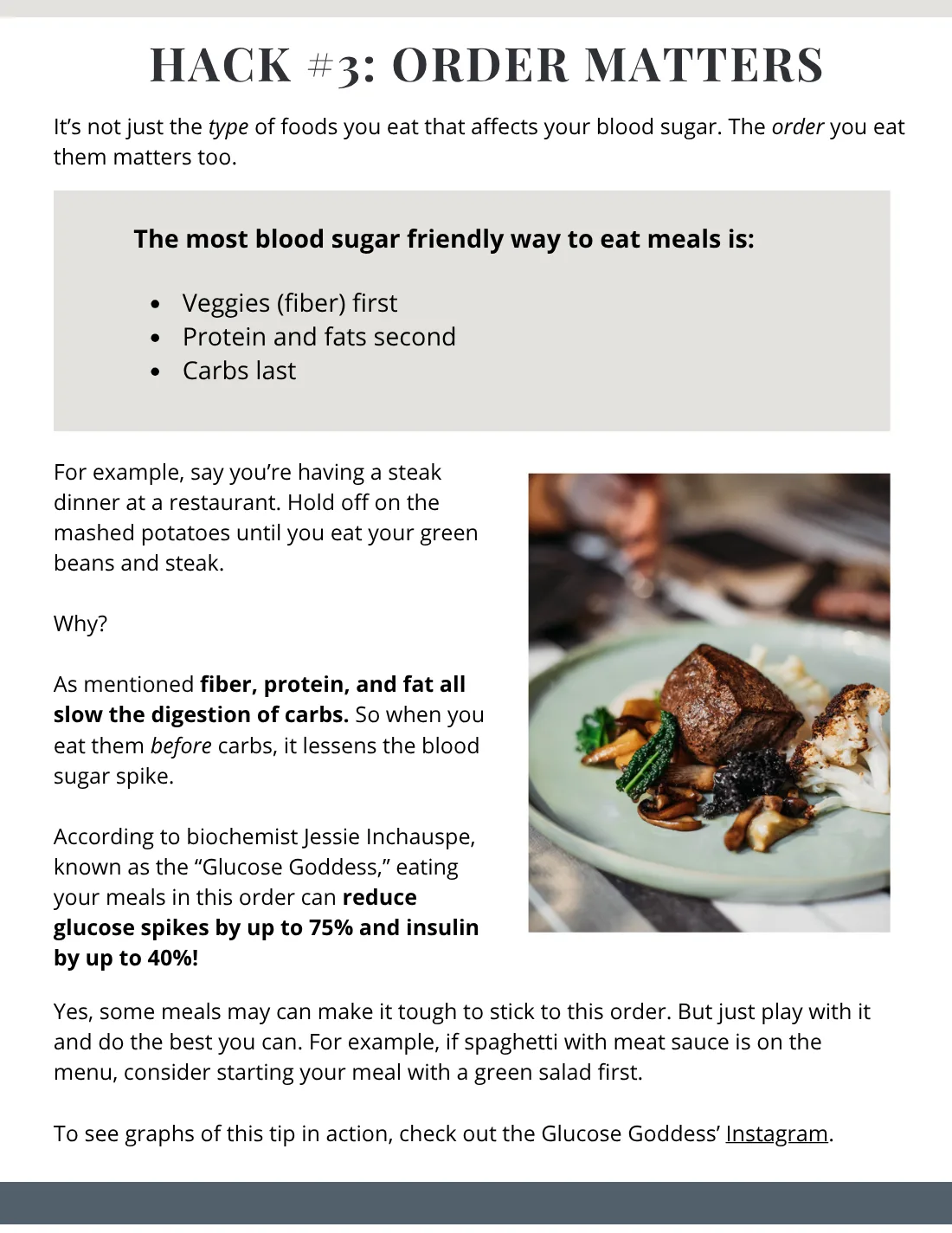
For example, say you’re having a steak dinner at a restaurant. Hold off on the mashed potatoes until you eat your green beans and steak.
Why?
As mentioned fiber, protein, and fat all slow the digestion of carbs. So when you eat them before carbs, it lessens the blood sugar spike.
According to biochemist Jessie Inchauspe, known as the “Glucose Goddess,” eating your meals in this order can reduce glucose spikes by up to 75% and insulin by up to 40%!
Hack #4: Add in Vinegar
Vinegar is another simple tool to lower your blood sugar. Vinegar contains acetic acid, which slows down the digestion of carbs and increases how much glucose your muscles absorb. Translation? Vinegar can help blunt the glucose spike from carbs.
According to the Glucose Goddess, “Consuming one tablespoon of vinegar in a tall glass of water before a meal can reduce the glucose spike by up to 30%”
Any vinegar (except balsamic vinegar) will work. But many opt for apple cider vinegar (ACV) due to its many health-promoting properties.
If you can’t stomach taking a swig of vinegar water, no worries. Here are some other ways to sneak vinegar into your meals:
Ways to Add in Vinegar
- Start your meal with green salad topped with an apple cider vinaigrette
- Have a handful of pickles
- Add 1 tbsp of ACV to your tea
- Make an ACV marinade for meat or chicken (like this one)
- Add a tablespoon of ACV to your smoothies
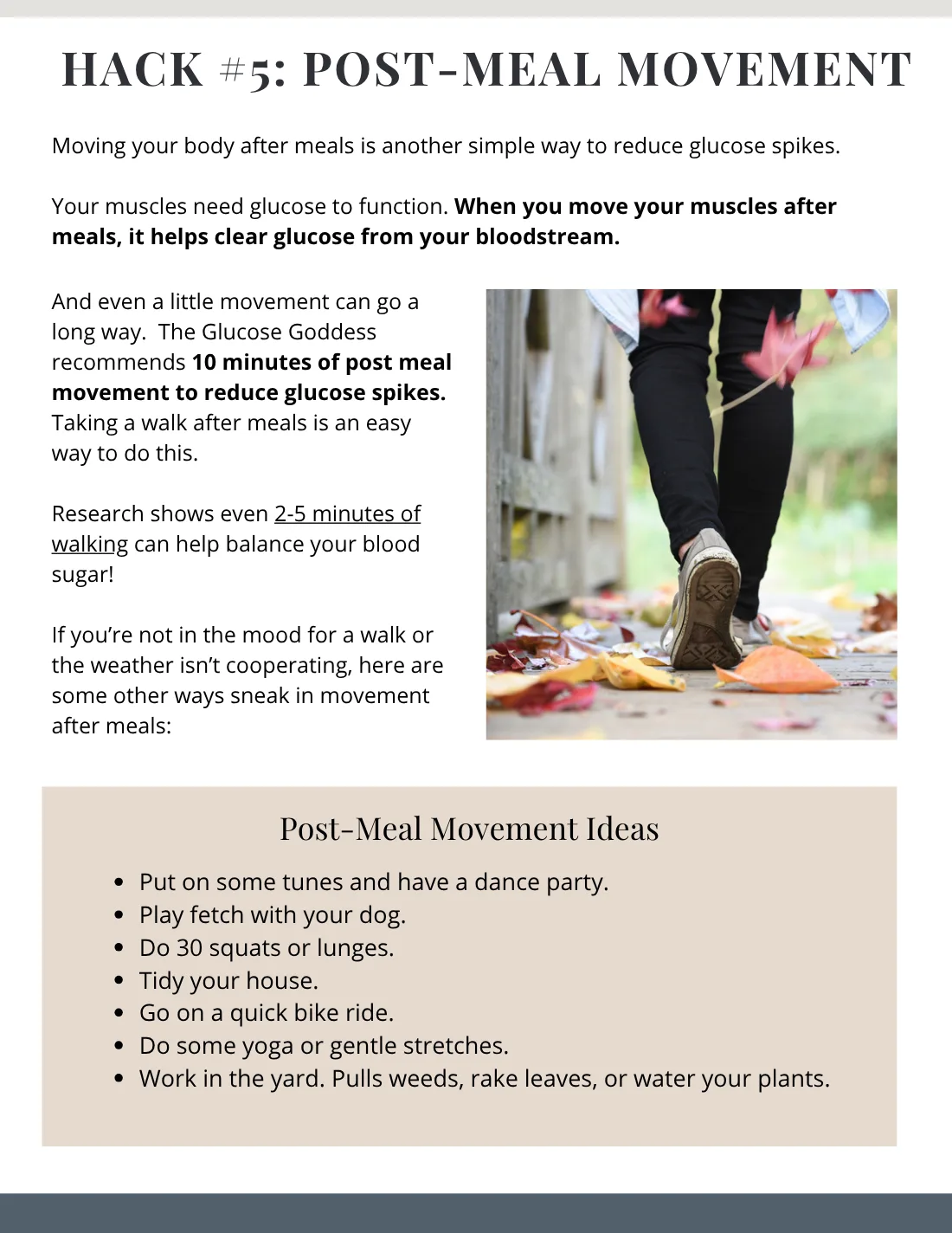
And even a little movement can go a long way. The Glucose Goddess recommends 10 minutes of post meal movement to reduce glucose spikes. Taking a walk after meals is an easy way to do this.
Research shows even 2-5 minutes of walking can help balance your blood sugar!
If you’re not in the mood for a walk or the weather isn’t cooperating, here are some other ways sneak in movement after meals:
Hack #5: Post-meal movement
Post-Meal Movement Ideas
- Put on some tunes and have a dance party.
- Play fetch with your dog.
- Do 30 squats or lunges.
- Tidy your house.
- Go on a quick bike ride.
- Do some yoga or gentle stretches.
- Work in the yard. Pulls weeds, rake leaves, or water your plants.
Moving your body after meals is another simple way to reduce glucose spikes.
Your muscles need glucose to function. When you move your muscles after meals, it helps clear glucose from your bloodstream.
Want help applying this to your own health?
Book Here