
Wellness Library
Stress, Sleep & Resilience
Text version
- Stress
- Resiliency
- Toolkit
Proven methods to let go of stress and create inner calm.
This is for educational purposes only. Always consult a doctor before changing diet and lifestyle changes.
Stress Resiliency Toolkit
How it works
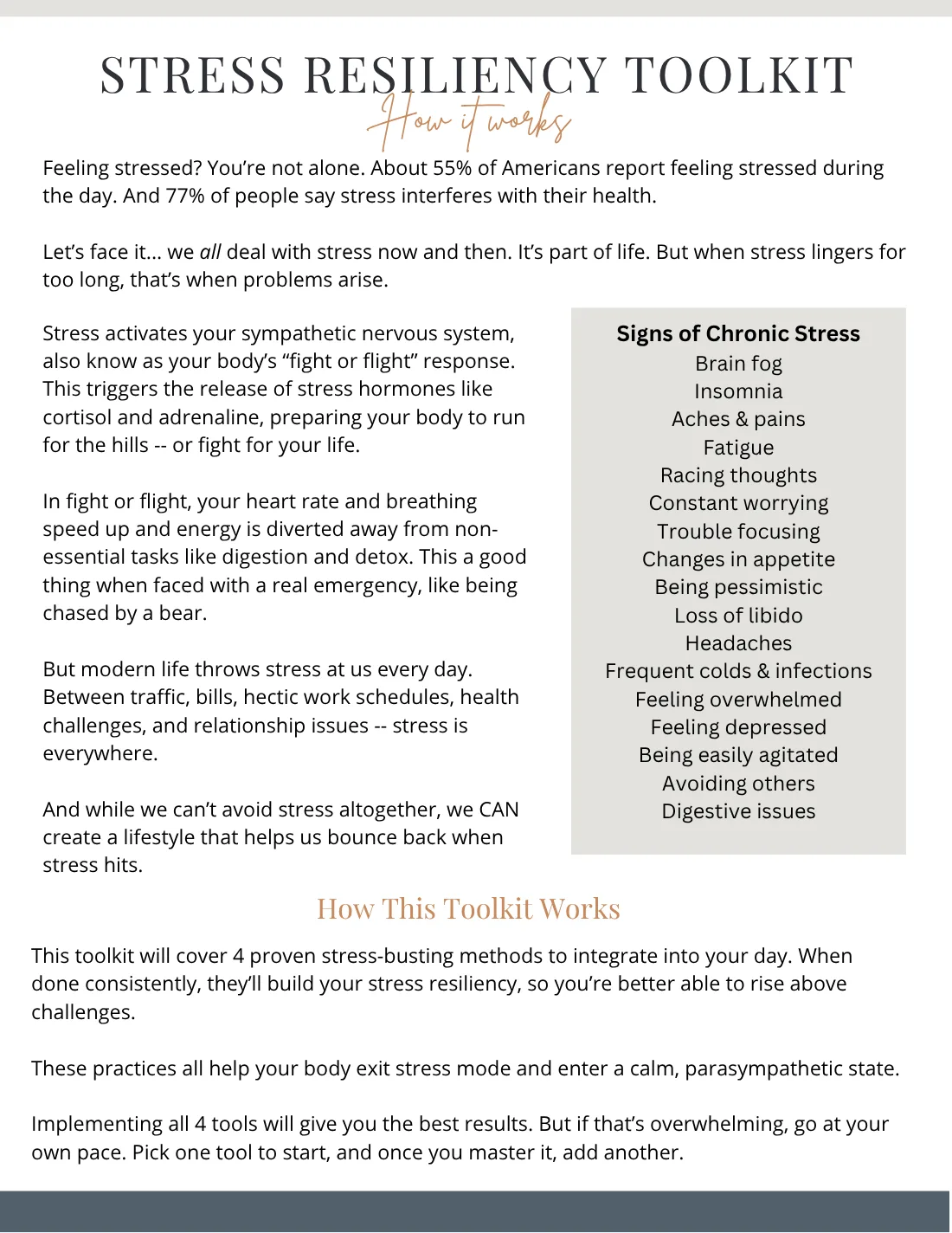
Feeling stressed? You’re not alone. About 55% of Americans report feeling stressed during the day. And 77% of people say stress interferes with their health.
Let’s face it... we all deal with stress now and then. It’s part of life. But when stress lingers for too long, that’s when problems arise.
This toolkit will cover 4 proven stress-busting methods to integrate into your day. When done consistently, they’ll build your stress resiliency, so you’re better able to rise above challenges.
These practices all help your body exit stress mode and enter a calm, parasympathetic state.
Implementing all 4 tools will give you the best results. But if that’s overwhelming, go at your own pace. Pick one tool to start, and once you master it, add another.
How This Toolkit Works
Stress activates your sympathetic nervous system, also know as your body’s “fight or flight” response. This triggers the release of stress hormones like cortisol and adrenaline, preparing your body to run for the hills -- or fight for your life.
In fight or flight, your heart rate and breathing speed up and energy is diverted away from non-essential tasks like digestion and detox. This a good thing when faced with a real emergency, like being chased by a bear.
But modern life throws stress at us every day. Between traffic, bills, hectic work schedules, health challenges, and relationship issues -- stress is everywhere.
And while we can’t avoid stress altogether, we CAN create a lifestyle that helps us bounce back when stress hits.
- Signs of Chronic Stress
- Brain fog
- Insomnia
- Aches & pains
- Fatigue
- Racing thoughts
- Constant worrying
- Trouble focusing
- Changes in appetite
- Being pessimistic
- Loss of libido
- Headaches
- Frequent colds & infections
- Feeling overwhelmed
- Feeling depressed
- Being easily agitated
- Avoiding others
- Digestive issues
Benefits of breathwork
- Strengthens lungs
- Improves digestion
- Helps heal from trauma
- Improves focus
- Reduces stress & anxiety
- Improves sleep
- Boosts immunity
- Lowers blood pressure
- Increases energy
- Boost circulation
- Improves focus
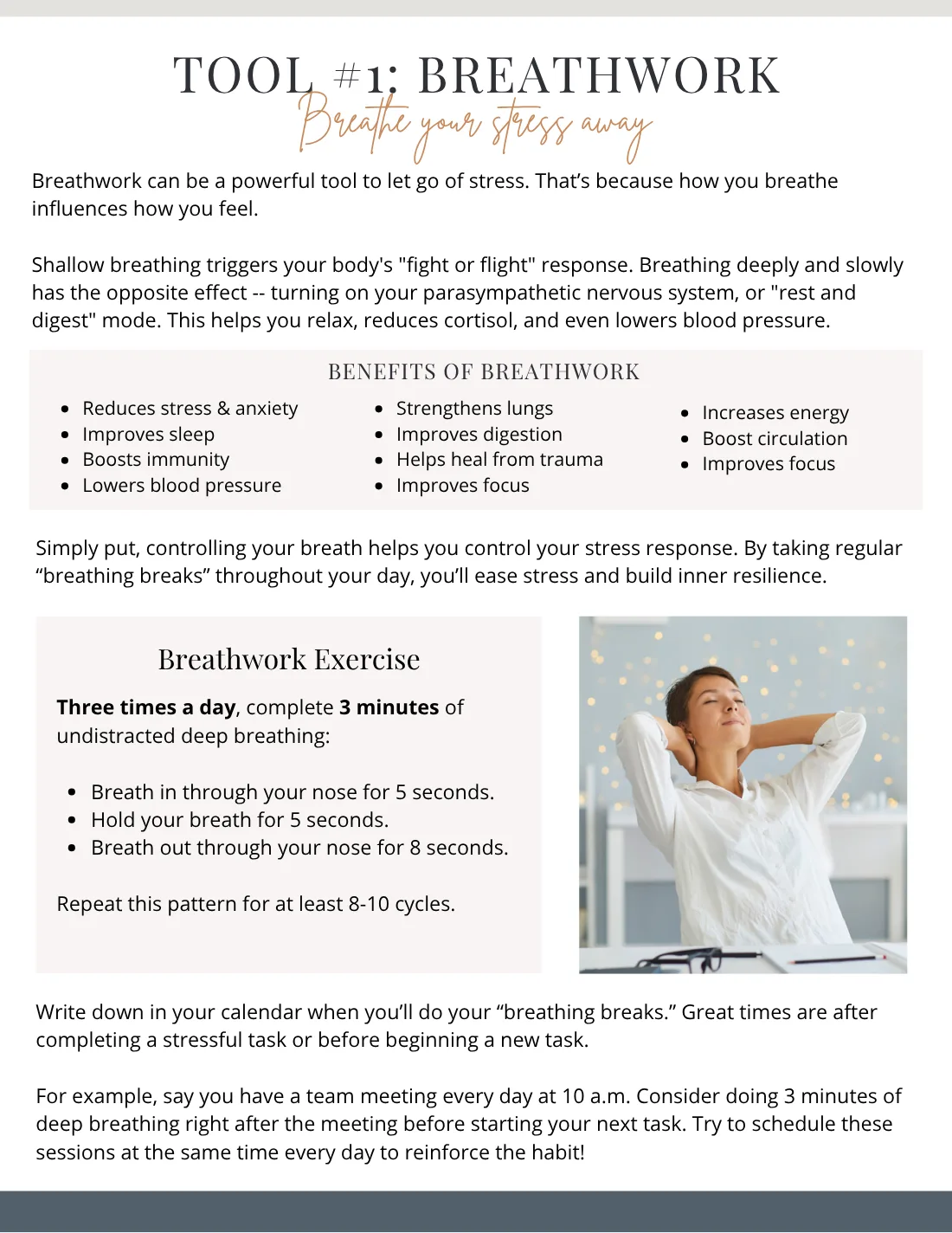
Breathwork Exercise
Three times a day, complete 3 minutes of undistracted deep breathing:
- Breath in through your nose for 5 seconds.
- Hold your breath for 5 seconds.
- Breath out through your nose for 8 seconds.
Repeat this pattern for at least 8-10 cycles.
Tool #1: Breathwork
Breathe your stress away
Breathwork can be a powerful tool to let go of stress. That’s because how you breathe influences how you feel.
Shallow breathing triggers your body's "fight or flight" response. Breathing deeply and slowly has the opposite effect -- turning on your parasympathetic nervous system, or "rest and digest" mode. This helps you relax, reduces cortisol, and even lowers blood pressure.
Simply put, controlling your breath helps you control your stress response. By taking regular “breathing breaks” throughout your day, you’ll ease stress and build inner resilience.
Write down in your calendar when you’ll do your “breathing breaks.” Great times are after completing a stressful task or before beginning a new task.
For example, say you have a team meeting every day at 10 a.m. Consider doing 3 minutes of deep breathing right after the meeting before starting your next task. Try to schedule these sessions at the same time every day to reinforce the habit!
Tool #2: Movement + Nature
Get grounded
Physical activity and outdoor exposure are both proven stress-relievers.
Exercise melts away tension and burns off pent-up stress and anxiety. It reduces stress hormones like cortisol and adrenaline, while boosting endorphins -- your body’s natural painkillers and mood elevators.
Outdoor exposure also acts as a natural “chill pill.” Research shows spending just 20 minutes in nature can reduce stress hormones like cortisol. Outdoor exposure also helps sync up your circadian rhythm to promote restful sleep.
Since exercise and nature BOTH have stress-busting benefits, for this tool we’ll hit two targets with one arrow...
Movement + Nature Challenge
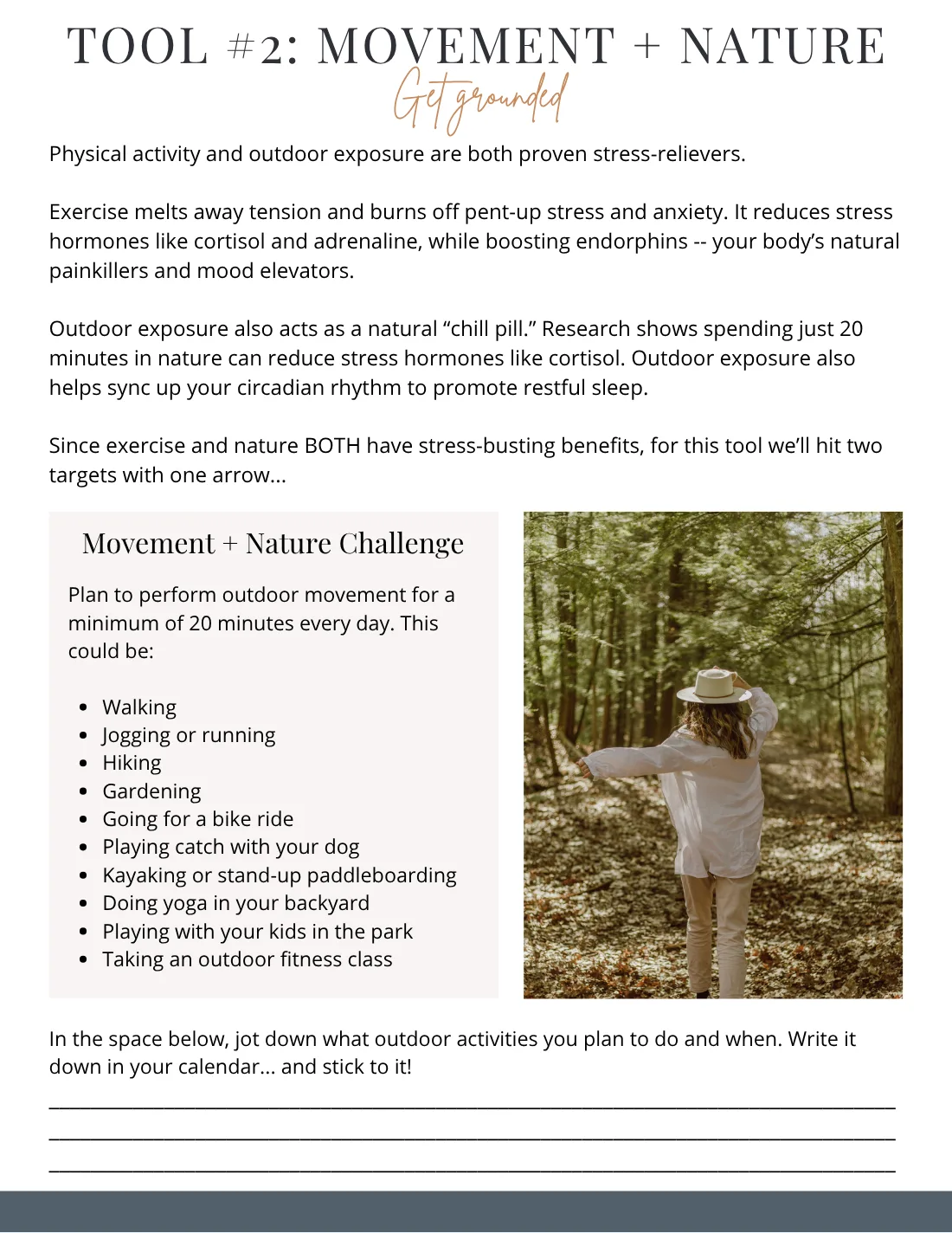
Plan to perform outdoor movement for a minimum of 20 minutes every day. This could be:
- Walking
- Jogging or running
- Hiking
- Gardening
- Going for a bike ride
- Playing catch with your dog
- Kayaking or stand-up paddleboarding
- Doing yoga in your backyard
- Playing with your kids in the park
- Taking an outdoor fitness class
In the space below, jot down what outdoor activities you plan to do and when. Write it down in your calendar... and stick to it!
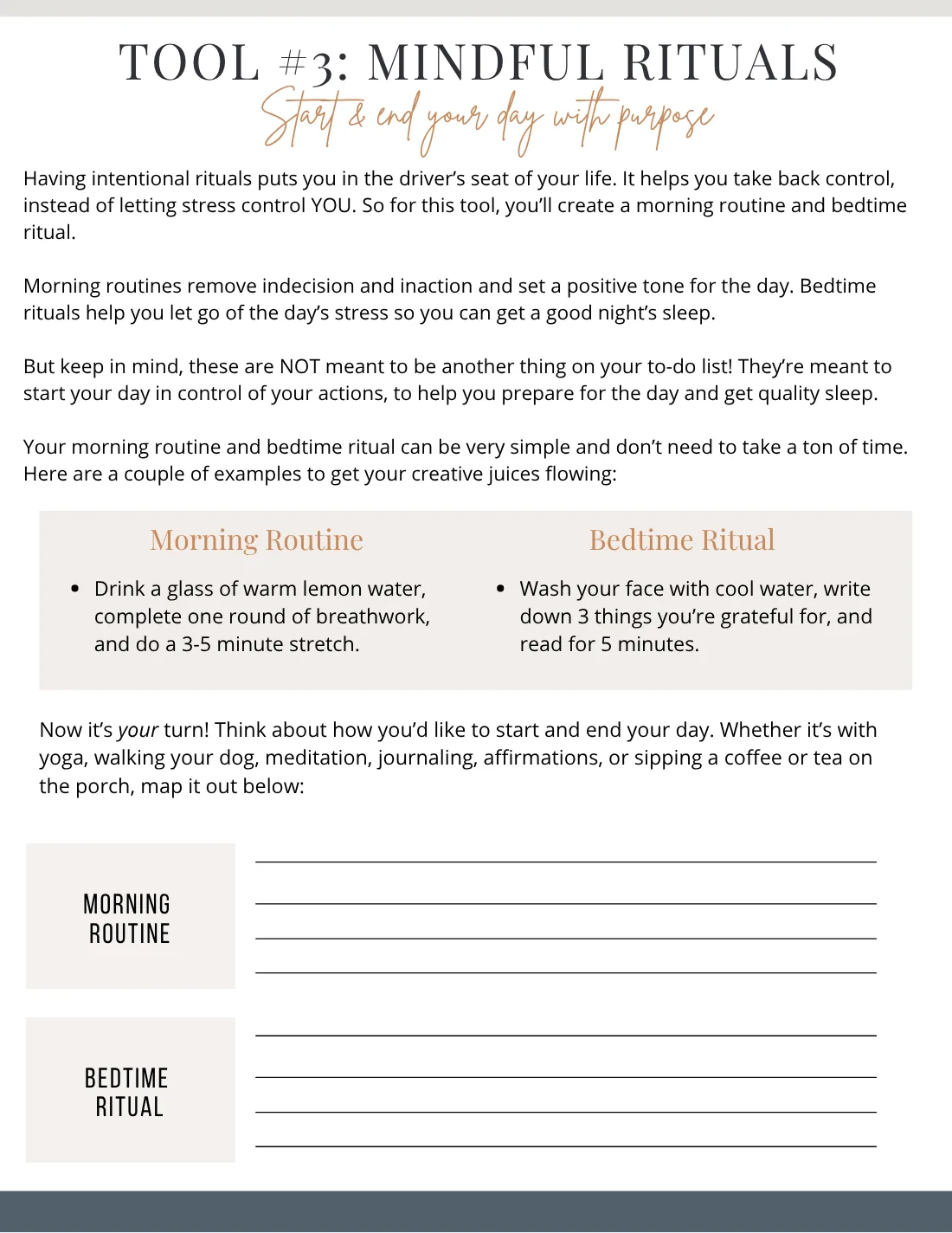
Bedtime Ritual
Morning Routine
Tool #3: Mindful Rituals
Start & end your day with purpose
Having intentional rituals puts you in the driver’s seat of your life. It helps you take back control, instead of letting stress control YOU. So for this tool, you’ll create a morning routine and bedtime ritual.
Morning routines remove indecision and inaction and set a positive tone for the day. Bedtime rituals help you let go of the day’s stress so you can get a good night’s sleep.
But keep in mind, these are NOT meant to be another thing on your to-do list! They’re meant to start your day in control of your actions, to help you prepare for the day and get quality sleep.
Your morning routine and bedtime ritual can be very simple and don’t need to take a ton of time. Here are a couple of examples to get your creative juices flowing:
Morning Routine
Bedtime Ritual
Drink a glass of warm lemon water, complete one round of breathwork, and do a 3-5 minute stretch.
Wash your face with cool water, write down 3 things you’re grateful for, and read for 5 minutes.
Now it’s your turn! Think about how you’d like to start and end your day. Whether it’s with yoga, walking your dog, meditation, journaling, affirmations, or sipping a coffee or tea on the porch, map it out below:
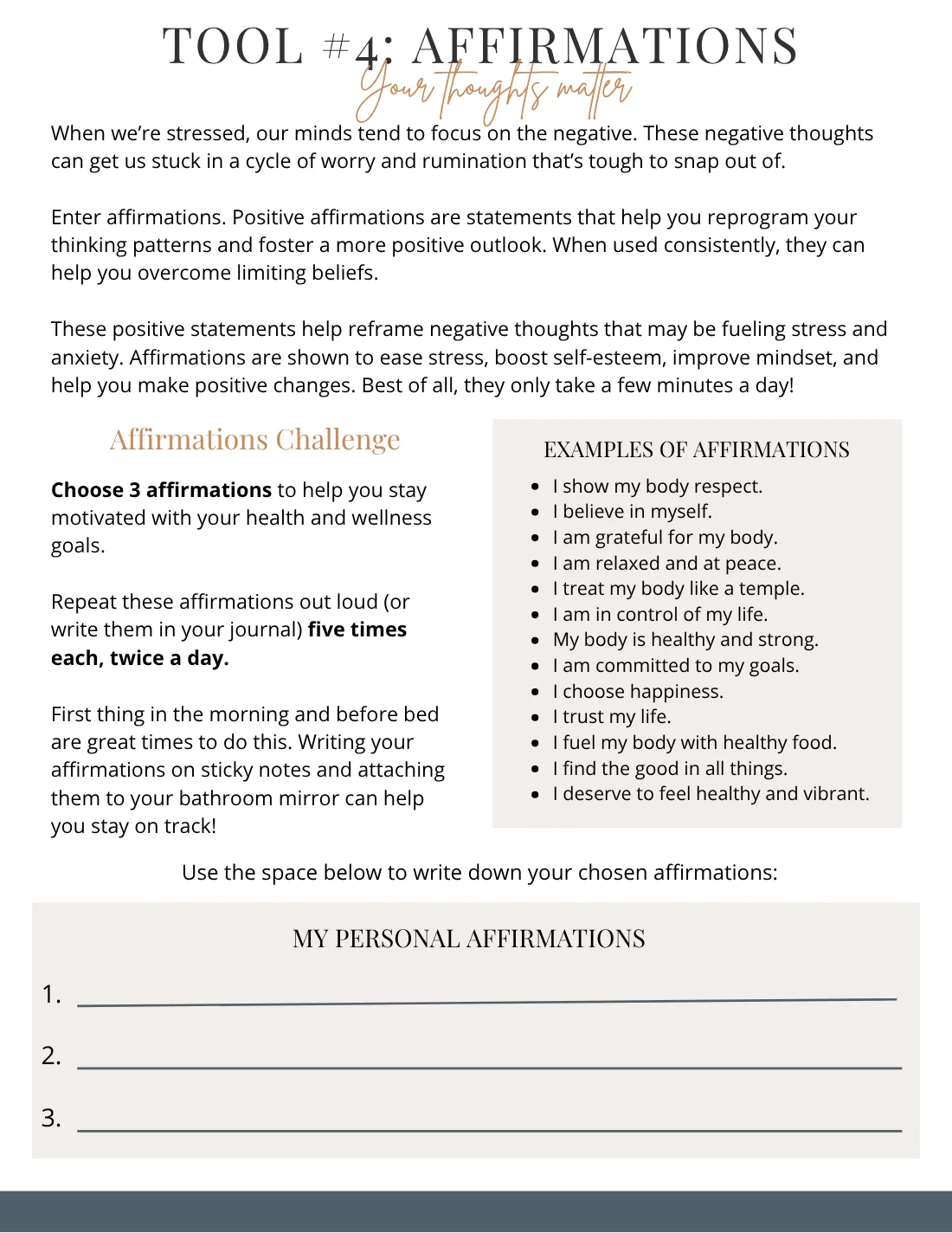
Tool #4: Affirmations
Your thoughts matter
When we’re stressed, our minds tend to focus on the negative. These negative thoughts can get us stuck in a cycle of worry and rumination that’s tough to snap out of.
Enter affirmations. Positive affirmations are statements that help you reprogram your thinking patterns and foster a more positive outlook. When used consistently, they can help you overcome limiting beliefs.
These positive statements help reframe negative thoughts that may be fueling stress and anxiety. Affirmations are shown to ease stress, boost self-esteem, improve mindset, and help you make positive changes. Best of all, they only take a few minutes a day!
MY PERSONAL AFFIRMATIONS
EXAMPLES OF AFFIRMATIONS
- I show my body respect.
- I believe in myself.
- I am grateful for my body.
- I am relaxed and at peace.
- I treat my body like a temple.
- I am in control of my life.
- My body is healthy and strong.
- I am committed to my goals.
- I choose happiness.
- I trust my life.
- I fuel my body with healthy food.
- I find the good in all things.
- I deserve to feel healthy and vibrant.
Choose 3 affirmations to help you stay motivated with your health and wellness goals.
Repeat these affirmations out loud (or write them in your journal) five times each, twice a day.
First thing in the morning and before bed are great times to do this. Writing your affirmations on sticky notes and attaching them to your bathroom mirror can help you stay on track!
Affirmations Challenge
Use the space below to write down your chosen affirmations:
Want help applying this to your own health?
Book Here